

You’re considering filing for a religious exemption that would excuse you from using AI at work.
There’s a precedent for it – people arguing that their belief system prohibits the use of AI. A software engineer in North Carolina did it. Others have done it as well. Even top religious leaders have spoken up about the dangers of AI.
Now, you’re not a particularly religious person. And there’s a big risk that you’ll fall behind professionally and be chosen for the next round of layoffs.
But maybe that’s catastrophizing. Maybe you’ll be just fine.
And anyway, everyone seems to be getting religion these days. Even Silicon Valley had a revival of sorts, all kinds of techies filling church pews.
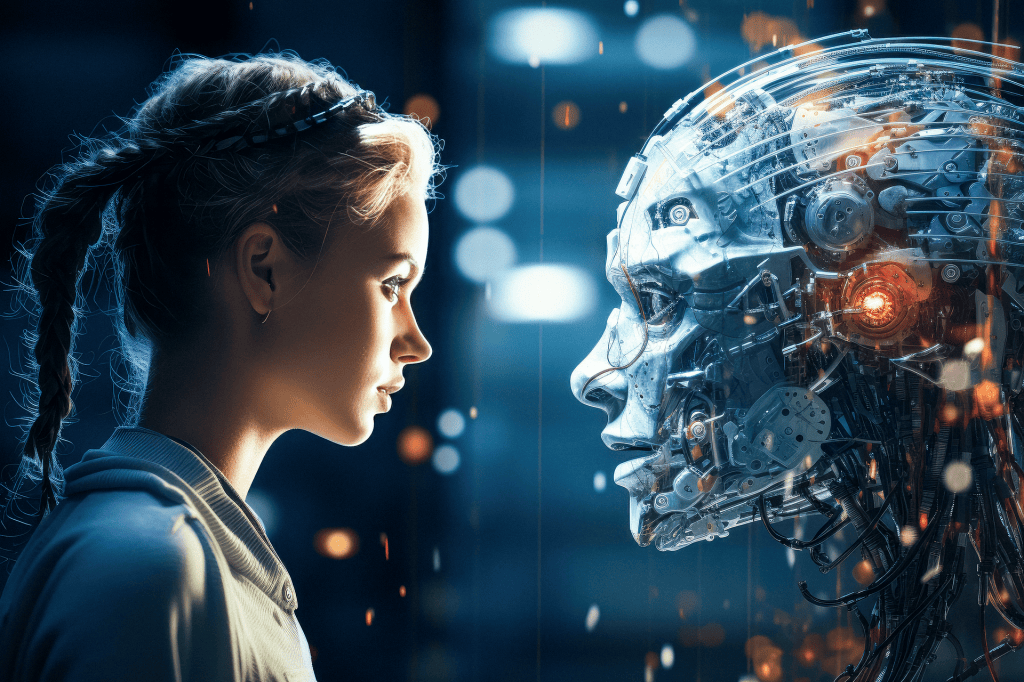
It seems as though the AI takeover has caused somewhat of an existential crisis. People have questions – deep spiritual questions – about what it means to be human in a post-human world.
What does humanity have that AI will never understand?
Death? Love? A soul? Sin? The need for atonement?
Out of curiosity, you’ve started reading the sacred texts again. Relics from a different time.
A time before superintelligent machines ruled the world.
When the reality of human nature wasn’t diluted by algorithmic interference or reduced to ones and zeros. When humans were feral, wild things.
When the supernatural held more power than the artificially superintelligent.
Maybe you’ll file for that religious exemption after all.
Maybe it’s worth the risk.
“The world is indeed full of peril, and in it there are many dark places; but still there is much that is fair, and though in all lands love is now mingled with grief, it grows perhaps the greater.”
― J.R.R. Tolkien, The Fellowship of the Ring





Leave a Reply