
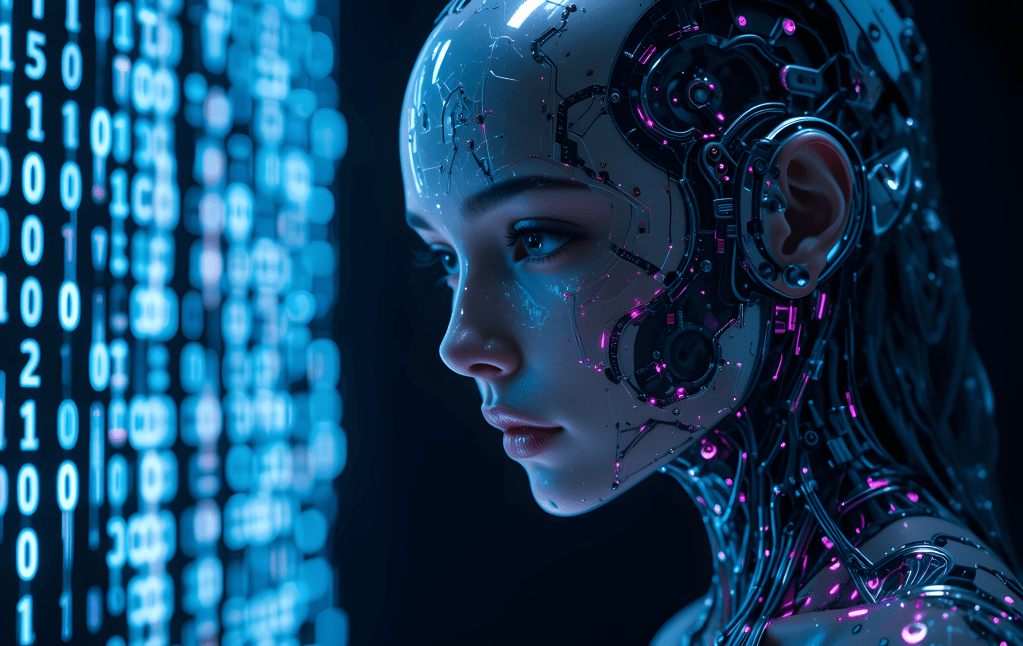
Self-improvement isn’t limited to the human experience.
AI is capable of something called “self-recursive” improvement, in which it reviews its own code, finds flaws, fixes them, writes new code, and tests the update.
This isn’t a bad thing. I mean, who doesn’t love a good transformation story? It might as well make its own glow-up reels.
But in my own personal journey from paranoid technophobe to occasional AI user, the idea of a self-improving AI unnerves me somehow.
If you’ve ever used AI for a creative endeavor, then you know it has limits. Don’t get me wrong, it’s really good. But there’s something missing about it. Something off.
A lack of soul, perhaps.
But what about future versions – the AI frontier?
I was reading a book the other day and a section really stood out for me.
“Assume this is the worst AI you will ever use,” writes Co-Intelligence author Ethan Mollick. “We are playing Pac-Man in a world that will soon have PlayStation 6s.”
Maybe AI will never have a soul. That’s a question for philosophers and theologians. But barring an unforeseen technological catastrophe, it will continue to improve.
And you know what?
I plan to do the same.
Here are some other things I’m thinking about this week…
Something New:
- AI-driven ransomware attack. Look Ma, no humans! JadePuffer, a “self-narrating” agentic AI, just conducted possibly the first known fully autonomous AI ransomware cyberattack. Cybersecurity experts say this is the first of many in a dangerous new era of AI-generated hacks. On the bright side, a human did indeed initially set up the AI and point it in the right direction. Small mercies.

Something Old:
- Terminator 2: Judgment Day (1991). My favorite Terminator film just turned thirty-five. In celebration, James Cameron announced that he’s re-releasing T2 in theaters later this summer, to remind us that “the good guys win against the AI superintelligence. And maybe that’s a message of hope we all could use this summer.” Nevermind the necessity of brute physical force.

Something Inspiring:
- Paralyzed woman uses Neuralink to create art again. Twenty years ago, artist Audrey Crews was in a bad car accident that left her paralyzed from the neck down. Last summer, she became the first female Neuralink patient. Now she uses the neural implant to control a cursor with her thoughts, creating digital art that she displays and sells online. Human imagination meets cyborg tech. Pretty cool.
Okay, that’s all for now. Join me here next week for more.





Leave a Reply